Today I received my Kickstarter copy of Dracula’s Feast and its first expansion Cthulhu & Friends. Here’s what’s in the box.


Nothing in life is to be feared, it is only to be understood. Now is the time to understand more, so that we may fear less.
Today I received my Kickstarter copy of Dracula’s Feast and its first expansion Cthulhu & Friends. Here’s what’s in the box.
I just received my Kickstarter copy of Dragon Brew – Make Beer, Not War from August Games.
Here’s how it looks:
I recently upgraded my Ubuntu 16.04 LTS to a pre-release of Ubuntu 17.10 since it comes with recent compilers. The clang compilers currently create faster binaries than gcc does. Also I wanted to use latest C++ features since I started playing around with libint (electronic integrals library) again.
With a new compiler, I want to be able to easily switch back. Here’s what worked for me:
sudo update-alternatives --install /usr/bin/cc cc /usr/bin/clang-5.0 100

sudo update-alternatives --install /usr/bin/c++ c++ /usr/bin/clang++-5.0 100
Here’s some code I have written today to find segments of a list that violate upper or lower limits. The minimum size is given as a parameter.
I know there are more elegant ways to do this, but the scripting language that I used features only a subset of C#, that is why I had to keep it simple, e.g. without Predicate.
[code]
var sequence = [0.25,0.5,0.5,0.5,0.7,0.8,0.7,0.9,0.5,0.5,0.8,0.8,0.5,0.5,0.65,0.65,0.65,0.65,0.65,0.65,0.65];
double lowerLimit = 0.1;
double upperLimit = 0.6;
int minWindowLength = 3;
// return type is a list of lists
var windows = [[0.0]];
windows.Clear();
int consec = 0;
int index = 0;
while (index < sequence.Count){
// store segments here
var window = new System.Collections.Generic.List<double>();
while ((index < sequence.Count) && (sequence[index] > upperLimit || sequence[index] < lowerLimit)) {
window.Add(sequence[index]);
consec = consec + 1;
index = index +1;
}
if (consec > minWindowLength) {
windows.Add(window);
}
window = new System.Collections.Generic.List<double>();
consec = 0;
index = index+1;
}
return windows;
[/code]
cd c:\temp
pandoc.exe -f docx am.docx -t rst -o am.rst
unzip .\am.docx
and move it to current working directory
mv .\word\media .
cd media
to jump into the directory
dir (to list all files)
a) Either by hand:
convert .\image2.gif .\image2.png
convert .\image1.emf .\image1.png
b) Or automatically by using mogrify (also part of ImageMagick):
mogrify.exe -format png *.emf
mogrify.exe -format png *.gif
And clean up:
rm *.gif
rm *.emf
Memcaching boosts the performance of OwnCloud dramatically. Read about this here. My server is running Ubuntu 12.04 LTS. PHP 5.6 and 7.0 is handled by Plesk. In my experience 5.6 is the most stable running with OwnCloud. APCU is supported by OwnCloud but was not present as a module in PHP (Only on the Sytem providing PHP 5.4). So here’s how you install it.
This is a follow up to my previous post on installing custom modules for PHP handled by Plesk. So I assume that all required software to build the modules is installed.

For PHP 7.0 simply run:
$ /opt/plesk/php/7.0/bin/pecl install apcu
PHP 5.6 is a bit more stable for running OwnCloud. However you will get an error that you need at least PHP 7.0 for installing ACPU. This is true for the current release (>5.0). So simply install the stable 4.x release:
$ /opt/plesk/php/5.6/bin/pecl install apcu-4.0.10
Register the module with PHP:
For PHP 7.0.x:
$ echo "extension=apcu.so" > /opt/plesk/php/7.0/etc/php.d/apcu.ini
For PHP 5.6.x:
$ echo "extension=apcu.so" > /opt/plesk/php/5.6/etc/php.d/apcu.ini
Reread the config:
$ plesk bin php_handler --reread

Now the only thing left is to add
'memcache.local' => '\OC\Memcache\APCu',
to your configuration file of OwnCloud (e.g. /var/www/owncloud/config/config.php).

$ apt-get install gcc build-essential plesk-php56-dev plesk-php70-dev libmemcached-dev libmemcache0 zlib1g-dev
Be aware that there may be some other packages that you need to install that I did not list here since they probably were already installed on my server. If you run into missing headers this might be an indicator for that.
$ /opt/plesk/php/5.6/bin/pecl install memcached
no --disable-memcached-sasl
If you need memcached with sasl2 support you can install it manually following this advice.
$ echo "extension=memcached.so" > /opt/plesk/php/5.6/etc/php.d/memcached.ini
$ plesk bin php_handler --reread

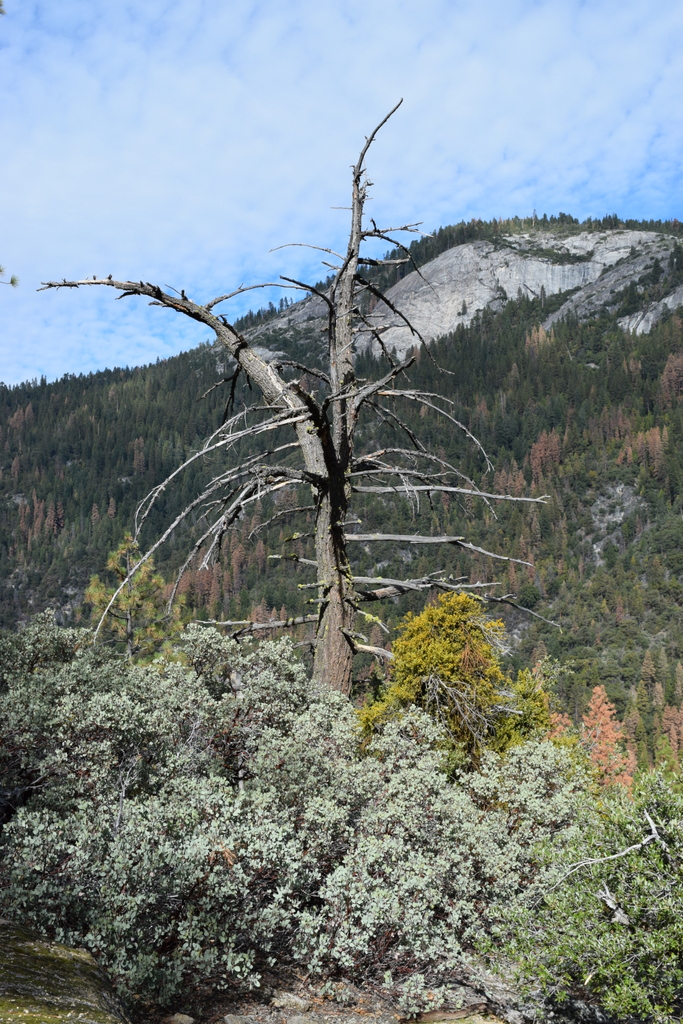
Last weekend we visited Yosemite National Park. What a great place to hike. Of course we brought some board games. I just wanted to share some advice and impressions.


I decided to migrate my blog from blogger to my own server running WordPress. I will also merge my pages from google sites. The process might take some time but I think it will be worth the effort.